
Feline obesity
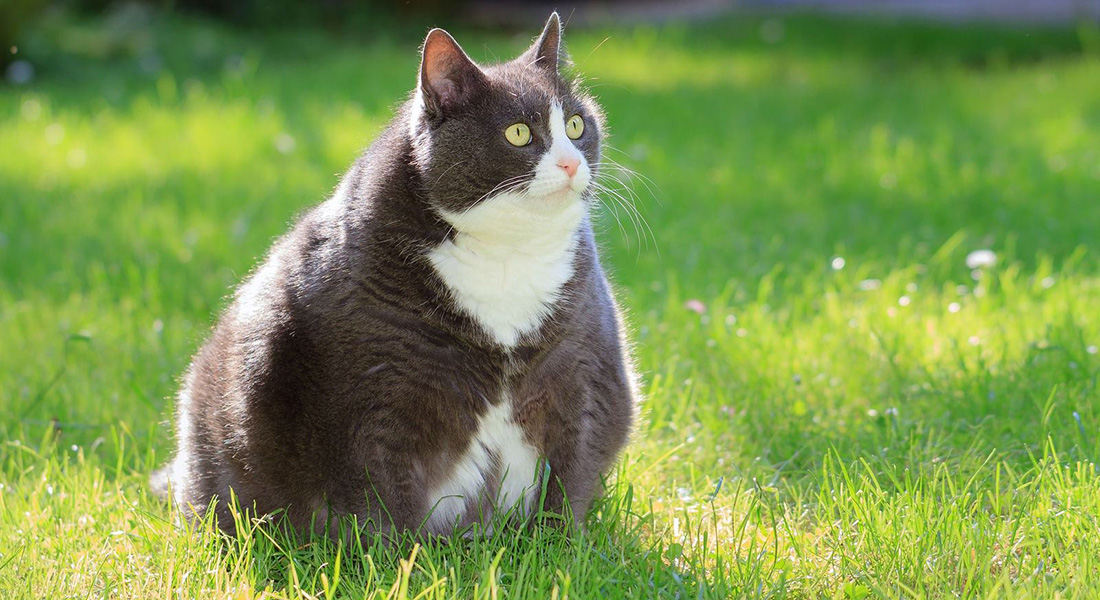
Feline obesity is associated with stronger owner attachment, while indoor confinement increases risk of obesity at an early age in domestic shorthaired cats
Research article by Charlotte Reinhard Bjørnvad, Camilla Brohave Mortensen, Maria Louise Støvlbæk Tams, Freja Kragh Jørgensen, Peter Sandøe and Thomas Bøker Lund.
Frontiers in Veterinary Science, March 2026.
Abstract
Knowledge of risk factors for overweight and obesity is important for making preventative strategies for feline obesity. The present study investigated risk factors for feline obesity in privately owned adult cats on Zealand, Denmark. Privately owned cats (>1 year old and reportedly healthy) were recruited through social media. During home visits, the cats underwent a full physical examination and body condition was scored by trained investigators. Owners answered a questionnaire relating to cat characteristics, owner characteristics and attachment to their cat, feeding practices and living environment. For statistical analyses cats were divided into moderately lean to moderately overweight (BCS 4–6/9) and heavy/obese (BCS 7–9/9) groups. Multivariable logistic analysis was performed to predict risk of a cat being heavy/obese. 192 cats were included in the final analysis. 65% were BCS 4–6/9, and 35% were BCS 7–9/9. In the multivariate analysis, owners of heavy/obese cats were significantly more attached to their cat and owners of these cats perceived their cat as less active than owners of normal weight cats. Indoor confined domestic shorthaired cats had a high risk of being heavy/obese from a young age (1 year old), while the risk for domestic shorthaired cats with outdoor access was low at a young age and only slowly increased – culminating around 7 years of age. In contrast, in purebred cats, age only modestly affected the risk of being heavy/obese. In conclusion, indoor confinement was identified to significantly increase the predicted risk of domestic shorthaired cats being heavy/obese from a young age, while the risk for cats having outdoor access was highest at an age around 7 years. Whether a closer owner attachment is a contributing factor in feline obesity development should be investigated further.